View All Promos

Like telling stories and making music, playing games and gambling are activities that humans in every corner of the world have enjoyed for thousands of years. But until relatively recently, people would only gamble between friends and family, or they would gamble in unlicensed institutions.
The introduction of casinos changed everything. From the spectacular setting and additional entertainment to the range of games and strict regulations, casinos allow people to enjoy gambling to the fullest.
However, casinos have changed since their inception, and are likely to evolve further. To explore the history and culture of casinos, as well as what the future may hold, Tachi Palace Casino Resort has put together this guide.
History of Casinos
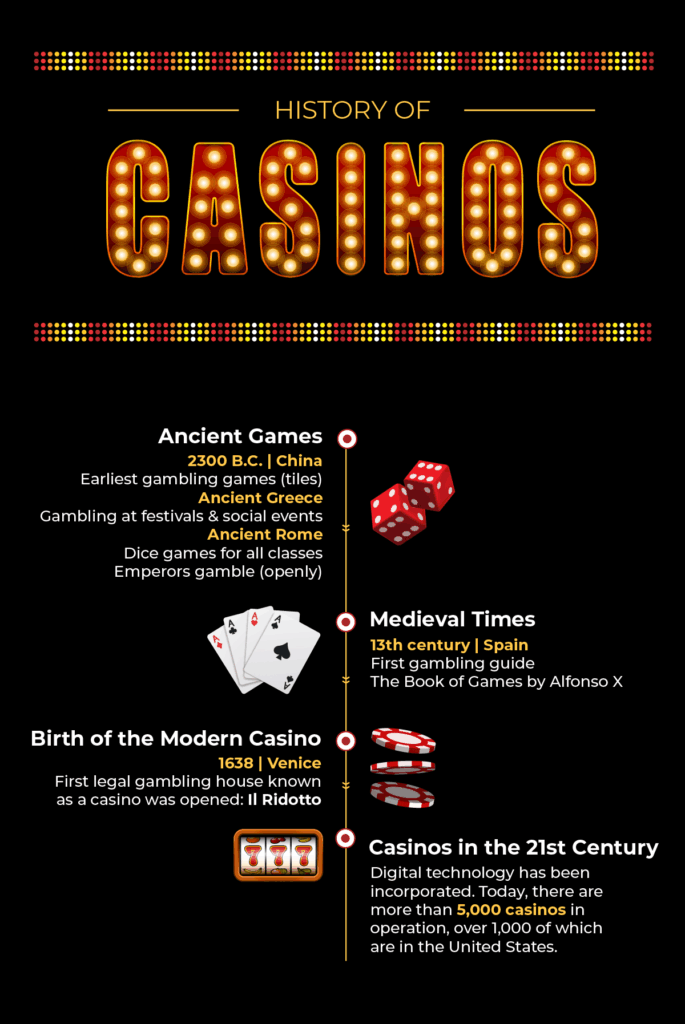
Since the first casino, these institutions have had a large impact on society. But the origins of casinos go back well before the first one was actually built.
Ancient Games
Evidence indicates that gambling was practiced thousands of years before casinos were invented. However, the games that these gamblers played may well have laid the foundations for the casinos we know today.
Some of the earliest records of gambling are evidence of tile games in China that date back to 2300 B.C. The ancient Greeks were known to play gambling games, too, which were often associated with social events and festivals.
In ancient Rome, the first emperor, Augustus Caesar, was known to hold raffles during banquets. He even played what may have been an early form of backgammon called Alea. Emperor Claudius was a known dice player, and Caligula enjoyed gambling so much that he converted his palace into a gambling house.
It wasn’t just the upper class who enjoyed gambling. The Romans may have invented an early form of craps, played by people of every station. Some historians believe that Roman soldiers would use shaved-down pig knuckles (hence knucklebones) as dice, and their shields as a table.
During ancient times, gambling houses were common in many societies, although these were unregulated and usually illegal institutions.
Medieval Times
While empires rose and fell, gambling games continued in various forms. Although the exact origins of playing cards are debated, the effect they would eventually have on gambling is undeniable. Games such as baccarat, blackjack and poker were invented in the following centuries, providing people with completely new games to gamble on.
It was during this time that gambling started to become more organized and written about. Alfonso X of Castile and León reigned in the 13th century, but his love of games led him to pen the first known guide to gambling. Titled “The Book of Games,” it mostly covered board games such as chess. However, it also described a game called Hazard, another early form of craps.
Birth of the Modern Casino
It wasn’t until 1638 that the first legal gambling house known as a casino was opened. This casino, Il Ridotto, was a result of the Venetian government’s goal to quell illicit gambling in the city and make a profit at the same time.
Besides the legality of the institution, Il Ridotto was different from the previous illicit gambling houses in many ways. This casino was opulent and glamorous, and offered far more than just games. It also provided high-quality food and music, allowing patrons to enjoy the casino without having to gamble. It catered to the city’s elite, with all the games played with high stakes. All players were also expected to follow the casino’s dress code, adhere to its customs and even order certain items off the menu.
Eventually, Il Ridotto closed due to the church’s influence and pressure, but it paved the way for the modern casino. Following the success of Il Ridotto, casinos began to appear elsewhere.
Casinos in the 21st Century
Thanks to new technology and evolving player habits, casinos have adapted their offerings since the turn of the century. Digital technology has been incorporated into modern casino culture to provide even more ways for customers to gamble, from virtual roulette to digital slot machines. Many casinos now offer online gambling, too, where their customers can often choose from dozens of games to play.
This increased accessibility has allowed casinos to grow globally. Today, there are more than 5,000 casinos in operation, over 1,000 of which are in the United States. This global expansion means the industry continues to grow, particularly online. In 2024, the casinos and online gambling industry reached $305.8 billion, and in the same year, the U.S. gambling industry had a record-breaking annual revenue of $71.92 billion.
The History of the Largest Global Casino Hubs
To fully appreciate the history of casinos, you need to know the history of the most famous casino hubs in the world.
Las Vegas
Las Vegas is synonymous with casinos and gambling. Almost half of all American casinos are found in Nevada, and more than 150 of those are located in Las Vegas alone.
Gambling was legalized in Nevada in 1931, coinciding with the start of the Hoover Dam construction project. With thousands working on the project just miles away, Las Vegas benefited massively. Each month, thousands of workers would travel to Las Vegas to gamble their earnings, bringing revenue into the small town. During the Second World War, a magnesium plant opened and had a similar effect. Within a few years, the town’s population boomed and it started to take shape as a gambling capital.
In 1941, El Rancho Vegas opened its doors. Widely regarded as the first hotel-casino in Vegas, it stood along Highway 91, which would later become known as the Strip. As the town expanded, it attracted mobsters like Guy McAfee, who helped shape its gambling industry. McAfee had a lasting impact on Las Vegas, as he’s credited with naming Highway 91 “the Strip” and opening the Golden Nugget casino.
Mobsters helped the town grow in other ways. Their national connections and influence meant they were able to bring celebrities and other high rollers to Las Vegas, helping boost the town’s reputation.
As other locations like Atlantic City began to compete, Las Vegas expanded its offering to non-gambling attractions. Shows, sports events and luxury hotels continue to attract tourists today. Despite this, Vegas is still predominantly associated with gambling and takes the top spot on many gamblers’ bucket lists.
Macau
One of the largest gambling hubs in the world and the largest in Asia, Macau has a rich history of casinos and gambling. From the 16th century, tourists were able to visit Macau and gamble, although it wasn’t legalized. However, Hong Kong was transferred to Britain in 1842, after which it became a large trading hub that competed with Macau. To create a new revenue stream, Macau legalized gambling in 1847.
In 1930, the Hou Heng Company won exclusive gambling rights, giving them a monopoly in Macau. Over the following years, the company built opulent and modern casinos that offered more than just gambling. They held free opera performances and offered complimentary food, cigarettes and even ferry tickets. This casino revolution led to Macau gaining a reputation as the gambling capital of Asia.
In 1961, Macau decided to focus on tourism and gambling as its main source of revenue. It declared itself a low-tax region to encourage more visitors to the area.
At the start of the 21st century, the monopoly law was abolished. Other casinos soon opened, and today, dozens of casinos can be found in Macau. Between 2011 and 2013, 63% of Macau’s GDP came from gambling, highlighting how much of an influence casinos have on the area. In recent years, there’s been a push to diversify Macau’s revenue streams, with the top six gambling operators forced to collectively pledge $12.5 billion to develop non-gambling infrastructure.
Monte Carlo
Situated in the tiny country of Monaco, Monte Carlo is one of the country’s four quarters and the place to go to gamble in Europe. Its most famous casino, the Monte Carlo Casino, was built in 1878 by Prince Charles III of Monaco. The casino faltered at first, struggling to entice gamblers.
However, after François Blanc, who had overseen one of the prince’s previous casinos, took over, the casino’s fortunes changed. Soon, it was so successful that the town of Monte Carlo sprang up around it and was named in honor of the prince and his casino.
From the 1960s, the government took over the casino company’s operations. Today, the gambling industry in Monaco is heavily regulated. A law from the 19th century banning residents of Monaco from gambling is still in effect, meaning only visitors to Monte Carlo can gamble in the casino. However, residents still benefit from the town’s gambling, as the revenue created by the industry means that the government doesn’t require residents to pay any income tax.
Culture of Casinos
The casino culture has both affected society and provided a reflection of it.
How Casinos Reflected Social Hierarchy
For many years, casinos were only accessible to wealthy patrons who could afford the high stakes set by the house. They also had to meet the dress code and be seen to order food and drink, all of which cost money too. As such, being seen in a casino was a sign that you were a person of wealth and success. Less wealthy gamblers would visit unlicensed gambling houses instead.
Today, this divide isn’t quite so obvious. Some casinos still have dress codes and higher minimum bets than others, but many casinos pride themselves on their inclusiveness, setting low minimum bets to cater to anyone with a few dollars to spend. Online casinos have made gambling even more accessible, allowing anyone with an internet connection to access casino games.
How Casinos Have Shaped Modern Entertainment and Nightlife
Casinos have had an impact on how we play games and enjoy nights out. They provide a luxurious space for people to socialize, enjoy a rush of adrenaline and perhaps even make a profit.
Millions of Americans visit casinos each year, with 53% of American adults visiting one in 2025. However, only 56.6% of those visitors gambled, highlighting how casinos can offer plenty more than just gambling. Shows, restaurants and entertainment are common in many casinos, giving visitors plenty to do.
How Casinos Have Influenced Popular Culture and Entertainment
Casinos have another, less direct impact on how we have fun. The high stakes of a casino make it the perfect setting for a story, which is why they often feature in popular culture.
From books like “Casino Royale” by Ian Fleming and “The Gambler” by Fyodor Dostoevsky, to films such as “Rain Man” and “Ocean’s Eleven,” these media are still widely known and loved years after they were made. Other notable films involving casinos and gambling include:
- “Casino”
- “The Cincinnati Kid”
- “The Sting”
- “21”
- “The Hangover”
- “Now You See Me”
While casinos may only feature briefly in some of these films, their inclusion as a place of splendor and high stakes is what makes them so effective in storytelling.
What Is the Future of Casinos?
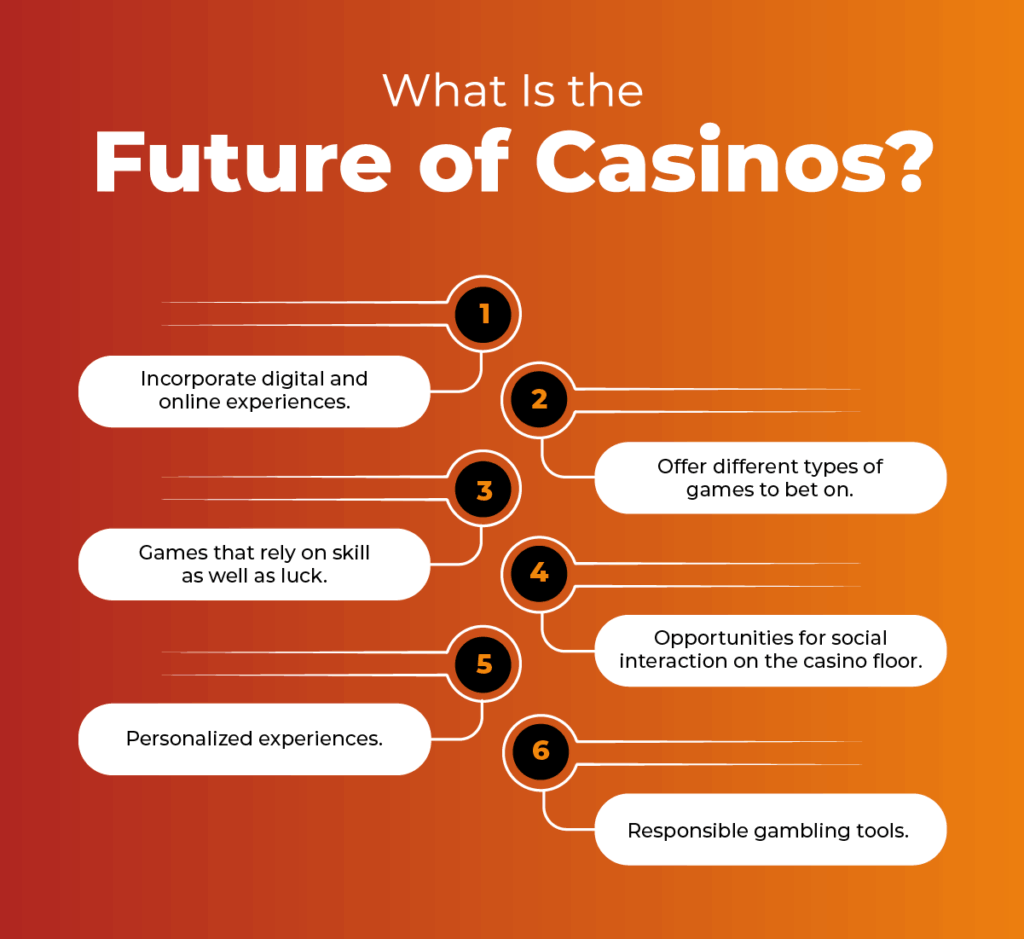
It’s hard to pinpoint exactly what future innovations might reshape casinos. What is certain is that as technology advances, casinos are likely to create new and improved ways to gamble.
It’s also expected that casinos will focus more on millennial and Gen Z gamblers. As such, incorporating digital and online aspects into the casino experience is increasingly important. It may also mean adapting casinos to be more friendly to casual gamblers by offering different types of games to bet on, such as esports.
Casinos may also have to offer more:
- Games that rely on skill as well as luck.
- Opportunities for social interaction on the casino floor.
- Personalized experiences.
- Responsible gambling tools.
A Rich History and Culture
Casinos have a history dating back to the 17th century, although many of their features date back millennia. Since the first casino, pioneers have evolved the way we enjoy them, making them more accessible and affordable for a larger audience. Today, just about any adult can gamble in a casino, either in person or online. This has led to an increased impact on global culture.
The future of casinos is unclear, but since they continue to grow in popularity, it’s likely they’ll successfully cater to gamblers for years to come.
Popular Posts